
Following its public launch on November 16, Backtrade introduces a shared-pool model designed to return a portion of trading economics to retail participants who incur losses.
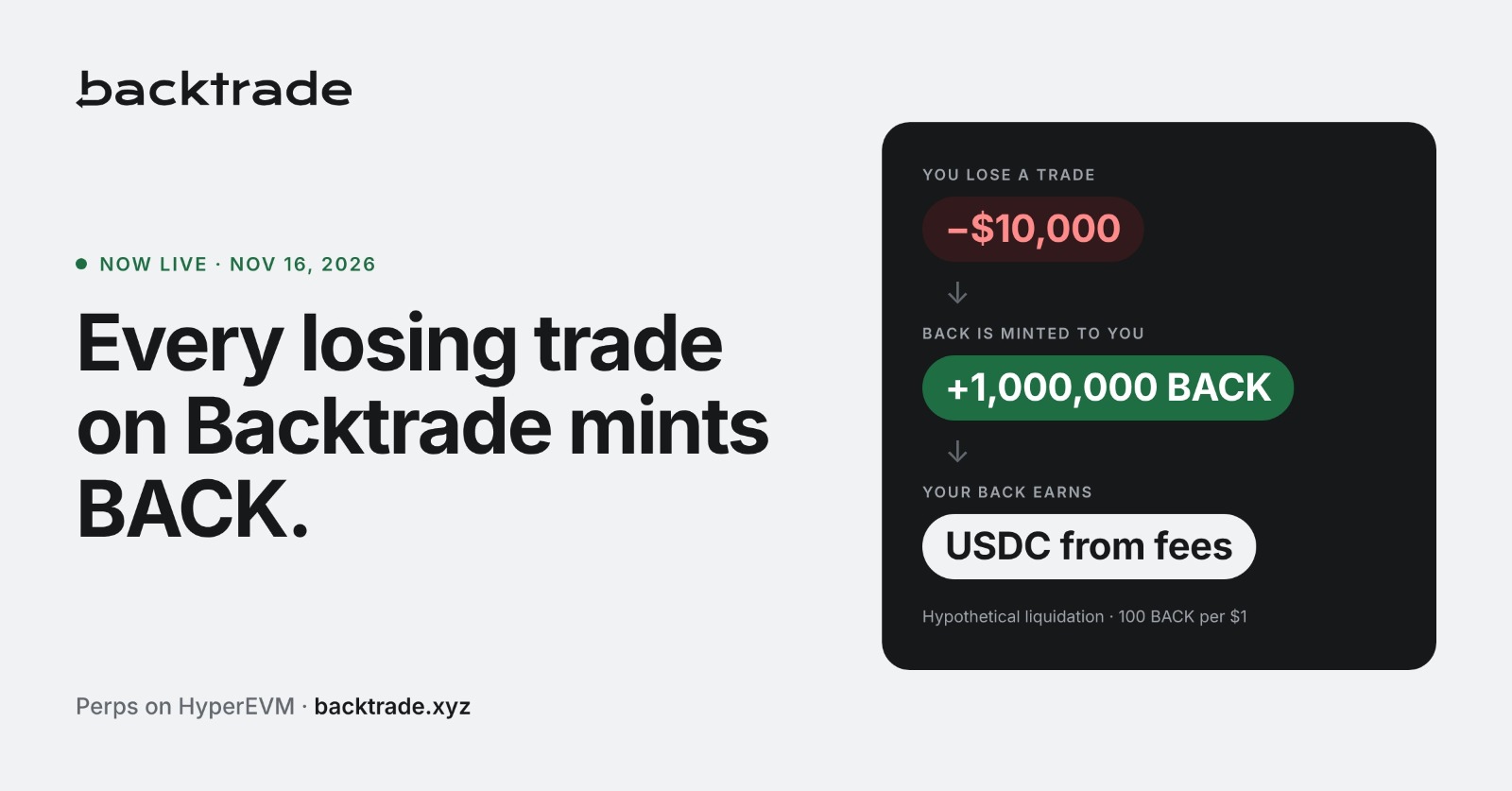
November 21, 2026 — Backtrade, a newly launched derivatives trading platform, today highlighted its novel economic model designed to address a long-standing reality in retail trading: while the vast majority of retail leveraged traders lose money, conventional platforms keep the resulting revenue and surplus.
Global regulatory data consistently underscores the high rate of retail losses. According to the Securities and Exchange Board of India, 89.2% of individual futures and options traders lost money in fiscal 2022, while European retail broker disclosures show that roughly 74% to 89% of client accounts lose money trading leveraged contracts for difference. On traditional venues, a losing trader’s margin flows entirely to counterparties, insurance funds, and the platform itself.
Backtrade, which opened to the public on November 16, operates on a different arrangement. Users trade against a shared pool that launched empty and is funded strictly by trader losses, with no outside investor capital permitted in the pool.
“Most trading venues make money when their users lose,” said Lucas, founder of Backtrade. “We built Backtrade so that the traders who fill the pool are the people it pays.”
How the Backtrade Model Works
Risk Disclosures and Platform Parameters
Backtrade emphasizes transparency around the mechanics and risks of leveraged derivatives. Closing a losing trade still results in the loss of the trader's full margin, and BACK units carry no guaranteed financial value. Winning trades are always paid first; if the pool temporarily lacks funds to cover a winning trade in full, payouts are processed via a first-in, first-out queue. Additionally, the platform's code has not yet completed an external audit, and high-leverage trading carries a substantial risk of loss.
About Backtrade Backtrade is a derivatives trading platform that shares a portion of its fee income and pool surplus with traders who incur losses through a non-transferable unit called BACK. For more information, visit backtrade.xyz.