
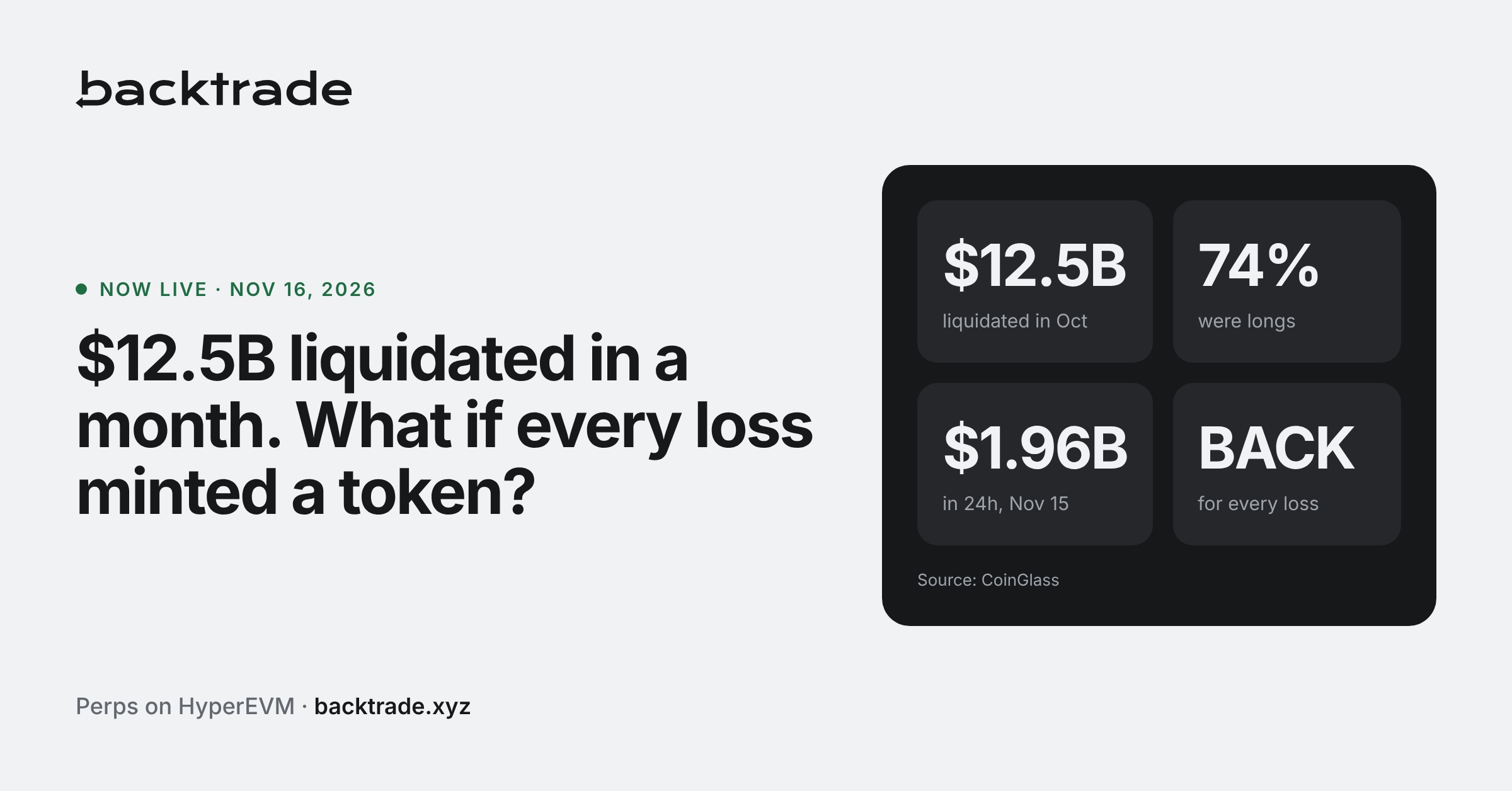
Backtrade, a new perpetuals exchange on Hyperliquid, converts every losing trade into BACK, a token that earns a share of exchange fees. Here is what traders ask first.
November 16, 2026. Every trader loses positions. Professional desks build their strategies around it. On most exchanges, a losing trade teaches you something and costs you money, and that is the whole transaction. Backtrade, which opened to all traders today on Hyperliquid’s HyperEVM, adds a third item: a token minted to you each time you lose.
Backtrade is live. Start trading at app.backtrade.xyz: connect a wallet and deposit from 10 USDC.
Your loss goes to the house, a USDC pool that only trader losses can fill. The exchange mints you 100 BACK for each dollar the house keeps. If you get liquidated, you receive 100 BACK per dollar of margin. Your tokens start earning at the next distribution, with nothing to stake or lock.
BACK holders share two streams, paid in USDC. They split half of the exchange’s fees on wins, losses and liquidations. Once the house pays winning traders, holders also receive anything above $500,000 in the pool. Each payout follows your share of all live BACK.
Seven days. Your BACK burns at the first midnight UTC at least seven days after minting, and the USDC it earned stays yours. One exception helps early users: the countdown starts only after the house first reaches $500,000, so tokens minted before then earn for longer.
No. You receive BACK only by trading and losing. You cannot transfer it, and no exchange lists it. The team and investors received no allocation. Backtrade states that it promises the token no value.
Yes, on a large scale. Papertrade, a Hyperliquid exchange that pays stakers from trader losses, opened on October 10, 2026. In its first seven days it generated $57.16 million in revenue and sent $52.76 million of it to stakers, according to DefiLlama data reported by KuCoin News. Backtrade applies the idea with a seven-day token life, so later losses earn on the same terms as early ones.
“Losses are part of trading, and every trader knows it. On Backtrade, a losing trade gives you a stake in what the exchange earns, so the loss stops being the last word,” said Lucas, founder of Backtrade.
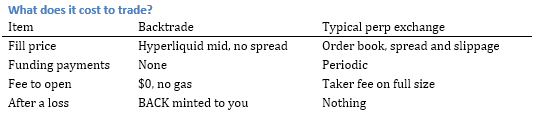
Backtrade charges on winning closes: a 2% win fee plus a 1.2% referral fee, or 1% if you sign up through an invite link. On a losing close you pay the loss and no more.
1. Connect an EVM wallet at app.backtrade.xyz and sign once to enable trading.
2. Deposit at least 10 USDC from Hyperliquid or HyperEVM.
3. Pick BTC or ETH, choose long or short, and set margin from $10 with leverage up to 1000x.
No external firm has audited Backtrade’s contracts yet. Winning trades draw on the house, and if it runs short, payouts wait in a first-in, first-out queue. At 1000x on BTC, a 0.05% move against you liquidates the position. BACK softens what a loss leaves behind. Losing money stays a bad outcome, so size your trades for what you can afford.
Open Backtrade and follow @backtrade_xyz on X.
Backtrade is a perpetual futures exchange running in smart contracts on Hyperliquid’s HyperEVM. Traders go long or short on BTC and ETH with up to 1000x leverage, fills at the Hyperliquid mid and no funding payments. Every losing trade mints BACK, a token that earns a share of exchange fees in USDC.
Website: backtrade.xyz · Docs: docs.backtrade.xyz · X: @backtrade_xyz
Papertrade data: DefiLlama via KuCoin News. This article is for information only and is not financial advice. Leveraged trading carries a high risk of loss.