
Why AI Glasses Are Becoming an Important Consumer Technology Category
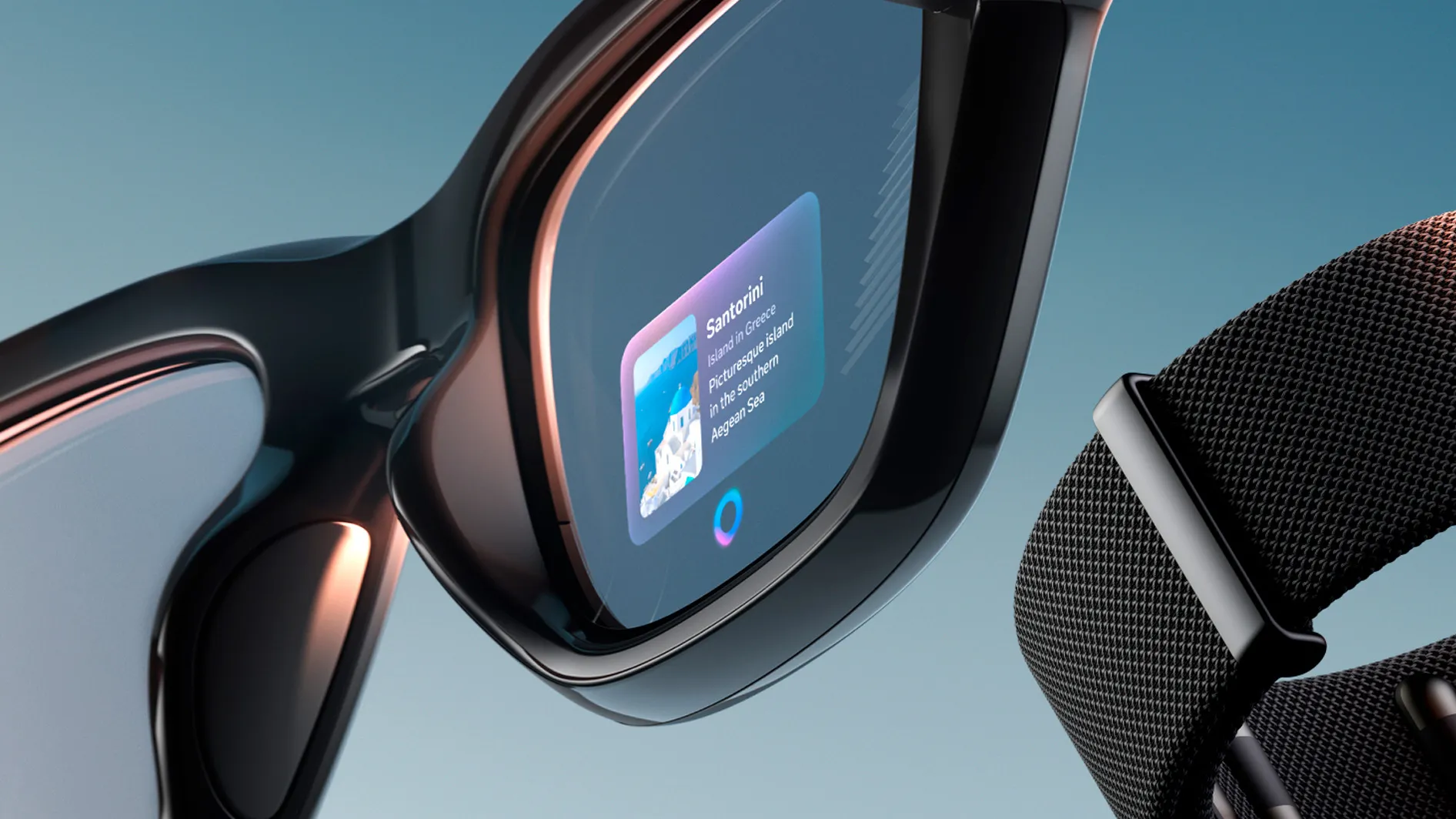
Consumer technology has spent decades moving closer to the user. Desktop computers brought digital tools into homes and workplaces, smartphones put powerful computing into our pockets, and smartwatches made selected information available directly from the wrist. AI glasses represent another step in that progression, combining familiar eyewear with cameras, audio, voice interaction, connectivity, and artificial intelligence in a form designed to stay accessible throughout the day.
What makes this category particularly interesting is that smart eyewear does not simply reproduce the smartphone experience on a smaller device. Instead, it creates new ways to interact with technology while remaining engaged with the surrounding environment. Products such as Meta glasses by Ray-Ban demonstrate how AI functionality can be incorporated into a product people already understand and wear, helping move smart glasses away from experimental hardware and closer to mainstream consumer technology.
Smart glasses are not a completely new idea. Technology companies have experimented with wearable displays, cameras, and connected eyewear for years, but earlier products often struggled to provide enough everyday value to justify another device. Artificial intelligence is beginning to change that by making wearable technology more conversational, responsive, and useful in ordinary situations.
Instead of requiring users to navigate complicated menus, AI-powered eyewear can increasingly rely on voice and contextual interaction. A person may be able to ask a question, capture something they are seeing, control audio, or request assistance without taking out a phone. The device becomes useful not because it contains more features than a smartphone, but because certain interactions can happen with less effort.
That distinction is important for consumer adoption. Technology tends to become part of everyday life when it solves familiar problems without demanding too much attention. Smart eyewear has the potential to do that by making digital assistance available in moments when reaching for another device would otherwise interrupt what the user is doing.
For many consumers, the first meaningful introduction to wearable technology came through fitness trackers and smartwatches. These devices established the idea that technology could be worn throughout the day and provide useful information without replacing a phone or computer.
AI glasses expand the concept of a wearable considerably. Rather than focusing primarily on health metrics and notifications, smart eyewear can combine voice, audio, visual input, communication, and AI assistance. This broader functionality puts glasses closer to the idea of a general-purpose wearable computing device.
McKinsey's research on emerging technology trends identifies AI-powered smart glasses as part of a wider move toward context-aware wearable devices that blend digital experiences with the physical world. That shift helps explain why smart eyewear is attracting attention from companies across technology, fashion, retail, software, and media rather than remaining a niche electronics category.
One of the biggest barriers to wearable technology is that people have to be willing to wear it. A device can have impressive specifications and still struggle if it feels uncomfortable, overly technical, or visually awkward in everyday settings.
Eyewear has an advantage because glasses are already a familiar part of daily life for millions of people. Consumers understand how frames should feel, how they fit into an outfit, and when they want to wear them. Smart eyewear therefore has an opportunity to introduce advanced technology through a form that does not necessarily look like a new type of computer.
This makes design especially important. Weight, frame shape, materials, comfort, color, and overall appearance can influence whether someone wants to wear smart glasses for hours at a time. Consumer technology companies entering this category need to think more like fashion and eyewear brands, where personal style can matter just as much as technical performance.
Smartphones trained consumers to interact with technology primarily through touchscreens, but not every digital task needs a screen. Asking for a short piece of information, capturing a reminder, controlling music, or starting a recording can often be completed more naturally through voice.
AI improvements are making these interactions more flexible because users do not always need to remember a rigid set of commands. More conversational systems can interpret natural requests and use context to understand what the person is trying to accomplish.
This is particularly useful for glasses because the user may be walking, commuting, traveling, exercising, or participating in another activity. Voice allows technology to remain available without requiring constant visual attention, which gives smart eyewear a different role from smartphones.
The strongest applications will likely be those where voice genuinely saves time. Trying to force complicated tasks into an audio interface would create frustration, but using voice for quick actions can make the interaction feel almost effortless.
One of the clearest advantages of smart eyewear is the ability to capture photos and video from a first-person perspective without holding a phone or camera. This can be useful during travel, family activities, sports, events, creative projects, demonstrations, and everyday experiences where holding a device would interfere with the moment.
Smartphones dramatically expanded casual photography and video, but they still change how someone participates in an experience. Taking out a phone, framing a shot, and watching an event through a screen can create distance between the person and what is happening around them.
Wearable cameras offer a different approach. They can make capturing certain moments feel more spontaneous while keeping the user's hands free. This does not mean they will replace smartphones for carefully composed photography, but they can create another option for situations where convenience and point of view are more important than precise framing.
That capability also makes smart glasses relevant to the rapidly growing creator economy, where first-person and behind-the-scenes content can provide a more immediate sense of participation.
Consumer devices become more valuable when they work well with technology people already use. Smart glasses are unlikely to succeed as isolated products that require users to create entirely new workflows for every task.
Instead, their value can grow through connections with phones, messaging services, music platforms, cloud storage, social networks, AI assistants, and other applications. A photo captured through glasses can be managed on another device, while a voice interaction can trigger an action connected to a service the user already knows.
This ecosystem approach is familiar from smartphones and smartwatches. Consumers are more likely to adopt a new device when it fits naturally into their existing digital life rather than creating another disconnected system that needs constant management.
For technology companies, these connections also create opportunities. Smart eyewear can become another interface for services that already exist, giving software platforms a reason to consider how their products might work in hands-free environments.
Few consumers are likely to replace their phones with AI glasses in the near future. Smartphones remain far better for detailed reading, typing, browsing, editing, gaming, and tasks that require large visual interfaces.
The more realistic role for smart eyewear is to handle some of the small interactions that currently cause people to reach for a phone dozens of times throughout the day. Quick voice requests, audio, reminders, communication, and spontaneous content capture can potentially happen without opening another device.
Even a modest reduction in smartphone dependence could be meaningful. Many people are increasingly aware of how often they check screens, sometimes beginning with a useful task and ending up distracted by unrelated notifications or applications.
Wearable AI could offer an alternative for selected interactions. The goal is not necessarily to remove screens from daily life, but to use them when they are actually the best interface.
Few consumer electronics categories depend on personal style as strongly as eyewear. A laptop can be placed on a desk, and a smartphone spends much of its life in a pocket or bag. Glasses, by contrast, sit directly on the face and become a visible part of someone's appearance.
That creates an unusual challenge for technology companies. Consumers may reject smart glasses even if the technology is excellent because they do not like the design, frame shape, weight, or way the product looks when worn.
Successful AI eyewear therefore requires collaboration between areas that traditionally operated separately. Hardware engineering, artificial intelligence, optical expertise, industrial design, fashion, retail, and software all need to work together.
This combination is also one reason the category has significant commercial potential. Smart glasses can appeal to people who may not normally describe themselves as early technology adopters if the product first feels like desirable eyewear and the technology operates naturally in the background.
Cameras and microphones make smart glasses useful, but they also make privacy an unavoidable part of the conversation. Consumers need to understand when features are active, what information is being processed, and how they can control access to their data.
The issue also extends beyond the person wearing the device. People nearby may want to know when a camera is recording or how a wearable is being used in shared spaces. Clear indicators and responsible product design can help establish social expectations as the technology becomes more common.
Technology companies have learned from previous connected-device categories that privacy concerns cannot simply be addressed through long policies that few users read. Controls need to be easy to understand, and products need to behave predictably. Trust could ultimately become a competitive advantage. Consumers may be more willing to integrate wearable AI into everyday life when they feel confident that they remain in control of the technology.
AI may receive most of the attention, but practical hardware limitations can determine whether smart glasses become a lasting consumer category. Consumers will not continue using a product throughout the day if it feels too heavy, becomes uncomfortable, or constantly needs attention because of limited battery life.
Manufacturers therefore need to make difficult trade-offs between processing capability, battery size, cameras, audio hardware, connectivity, and physical design. More features are not automatically better if they make the product significantly less comfortable. Software efficiency is part of this equation as well. Some AI tasks can happen on the device, while more demanding processing can be handled by a connected phone or cloud infrastructure. Finding the right balance can reduce power consumption while keeping the experience responsive.
For consumers, these technical decisions eventually become very simple questions: Are the glasses comfortable? Do they last long enough? Do the useful features work when needed? Those everyday factors will matter more than impressive specifications on a product page.
Whenever a new computing interface gains traction, software developers begin experimenting with applications designed around its strengths. Smartphones created entire industries around location services, social media, mobile payments, ride sharing, and app-based commerce.
Smart glasses could similarly generate software designed for voice-first, visual, and context-aware interactions. Travel assistance, accessibility, education, productivity, communication, fitness, navigation, and professional applications are all areas where wearable AI could develop further.
The best applications will not simply copy smartphone interfaces. They will need to be designed around the fact that people are wearing the device while doing something else. Short responses, simple interactions, and relevant contextual information will usually be more valuable than complicated menus.
This software ecosystem could become one of the most important factors in determining whether AI glasses remain an interesting accessory or develop into a broader technology platform.
New technology often generates excitement before consumers decide whether it deserves a permanent place in their routines. AI glasses will face the same test. Features that seem impressive during a demonstration must still be useful after weeks or months of ownership.
The strongest use cases are likely to be the ones that save small amounts of time repeatedly. Capturing something without reaching for a phone, getting a quick answer while walking, listening to audio, or completing a simple voice-controlled action may sound less dramatic than futuristic demonstrations, but these practical experiences are what build habits.
Price will also matter. Consumers will compare smart eyewear not only with traditional glasses but also with phones, smartwatches, earbuds, cameras, and other devices competing for the same technology budget. For the category to grow, the combination of design, usefulness, reliability, and cost has to feel reasonable rather than experimental.
The importance of AI glasses is not based on the assumption that everyone will soon replace smartphones with eyewear. Their significance comes from what they represent: computing is gradually becoming less dependent on traditional screens and more capable of responding to people within the context of everyday life.
Artificial intelligence makes that transition more practical because users can increasingly interact through natural language rather than complex menus. Cameras and sensors can provide additional context, while cloud services and connected devices handle tasks that are too demanding for lightweight hardware.
Smart eyewear therefore sits at the intersection of several important technology trends. AI, wearable computing, voice interfaces, consumer electronics, content creation, and fashion are converging within a single category.
Whether AI glasses ultimately become as common as smartwatches or develop into a more specialized product will depend on how useful they prove in everyday life. What is already clear is that they are moving beyond the idea of experimental eyewear and becoming a meaningful part of the conversation about where consumer technology goes next.