
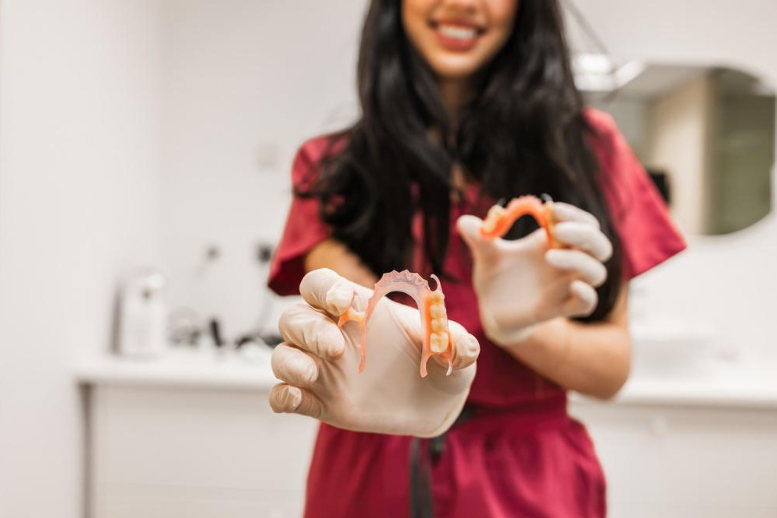
Lately for Americans, the most expensive health cost is not a doctor, it is a dentist. The cost increases if the appointment is skipped. Figures from the American Dental Association's Health Policy Institute show that 12.9% of people who needed dental care in 2025 went without it because of cost. That is more than double the share who skipped medical care (5%) or prescription drugs (4.9%) for the same reason. Among working-age adults, the figure climbs to 17%.
As dental bills rise, people are changing how they get care. That affects insurers, dental chains and the implants manufacturers. It is also a win for countries that now earn treating patients who fly in from the U.S. and Europe.
Americans spent $189 billion on dental care in 2024, up 3.6% from the year before after adjusting for inflation, according to the ADA. Unlike most of the healthcare economy, the largest share of that spending came straight out of patients' pockets rather than from insurers.
Prices have also run hot. Bureau of Labor Statistics data show the consumer price index for dental services rose approximately 13% in the last three years, and it outpaced headline inflation. For households already absorbing higher housing and grocery bills, a dental estimate in the thousands is often the first expense to be postponed.
The deeper issue is how dental insurance is designed. Most plans cap what they will pay in a given year, and those annual maximums were set at roughly $1,000 to $1,500 back in the 1970s. They have barely moved since. According to National Association of Dental Plans data cited by ADA News, 32.8% of in-network maximums still sit between $1,000 and $1,500, and another 48.2% fall between $1,500 and $2,500.
The ADA's own research notes that only a small share of patients ever hit those caps. But the ones who do are the patients needing major work. A single dental implant costs $3,000 to $5,000 in the U.S. One procedure can exhaust a year's benefit several times over.
When a domestic price is high and the service is portable, consumers start looking abroad. Dentistry fits that profile well. Treatment is planned rather than urgent, it is performed in outpatient settings, and outcomes are easy to compare in photographs.
Mexico and Costa Rica have long been the default destinations for Americans, while Hungary built its reputation serving Western Europeans. Turkey has emerged as the fastest-growing competitor. According to figures reported by Daily Sabah, 1,398,580 people traveled to the country for healthcare in 2025, generating $3.02 billion in revenue.
The drivers are familiar to anyone who follows emerging markets: a weaker currency, lower labor and real estate costs, and government promotion of health exports. What stands out to consumers comparing options for dental implants in Turkey is the pricing model as much as the price. Clinics commonly bundle surgery, lab work, hotel stays and airport transfers into a single quote. U.S. practices rarely package care that way, and it turns a medical decision into something closer to a travel purchase.
Not every U.S.-linked company loses out. Many clinics abroad use the same implant brands as American dentists, such as Straumann (SIX: STMN) and Nobel Biocare, owned by Envista (NYSE: NVST), so part of the money still goes to these makers. The bigger pressure is on U.S. dental chains, which will likely respond with payment plans and cheaper implant options. Insurers may also face growing calls to raise yearly coverage limits that have barely changed since the 1970s.
The savings math is rarely as clean as a headline price comparison suggests. Implant treatment typically requires two trips, separated by three to six months while the implant fuses with the jawbone. Flights, lodging and time off work all add to the bill. The harder risk to price is aftercare: if a complication appears after a patient returns home, some local dentists are reluctant to take on another provider's work, and any repairs are paid at domestic rates.
For investors and consumers alike, a few indicators will show whether this trend accelerates:
Domestic pricing: BLS dental services inflation and the ADA's quarterly reads on the dental economy.
Policy: Any movement on Medicare dental coverage or on annual benefit caps in employer plans.
Destination data: Turkey's full-year 2026 health tourism figures, along with the lira, which largely sets the price gap.
Manufacturer commentary: How implant makers describe volume growth in Europe, the Middle East and emerging markets on upcoming earnings calls.
Until insurance design catches up with the cost of care, the dentist's chair will remain one of the clearest examples of how Americans increasingly shop for healthcare as a global market.
This content is intended for informational purposes only and is not financial or medical advice.
Sources:
Becker's Dental: Dental care has the highest cost barriers in healthcare
ADA HPI: Coverage, access and outcomes
ADA HPI: Dental statistics, patients
ADA News: Dear ADA, annual maximums
Daily Sabah: Türkiye's Q1 health tourism revenue hits $761.5M
Grand View Research: Dental tourism market
Dental services price inflation, BLS CPI data via officialdata.org
NerdWallet: Does Medicare cover dental implants?